Admissions
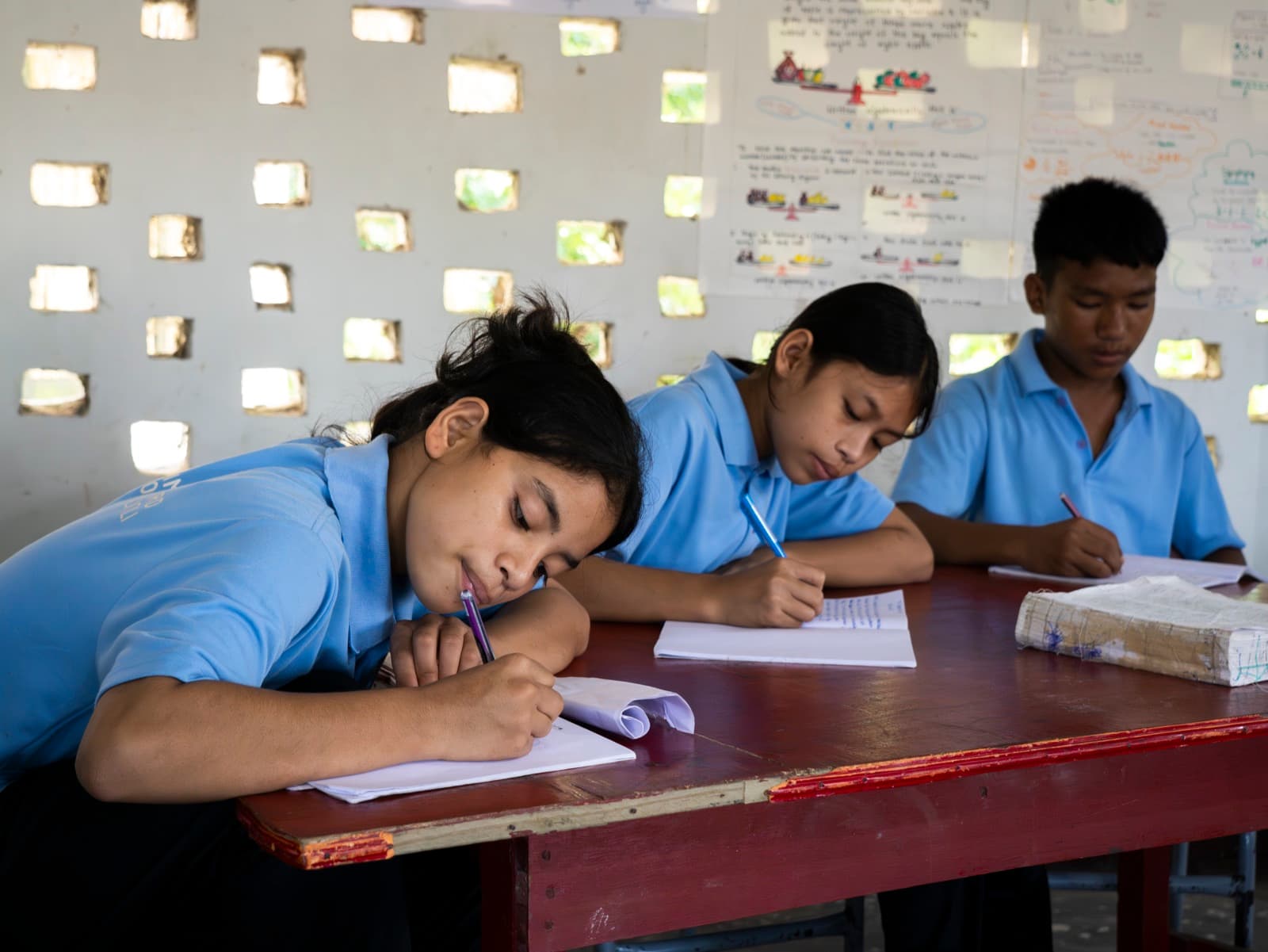
The Hummingbird School isn’t a school you apply to with a form and a fee. It serves the Mising community of Majuli and the children most at risk of never seeing a classroom. Here’s how it actually works.
The model, plainly
We don’t run admissions tests, interviews, or a fee structure that selects for ability to pay. The school exists because 19 Mising villages around Kulamua came together to build it for their own children, and the school continues to be built around that commitment.
In practice, this means roughly three groups of children attend the Hummingbird School:
None of these pathways involve a fee. Children whose families can contribute do so; the rest are fully supported through donor funding.
If you’re a parent in the Mising community
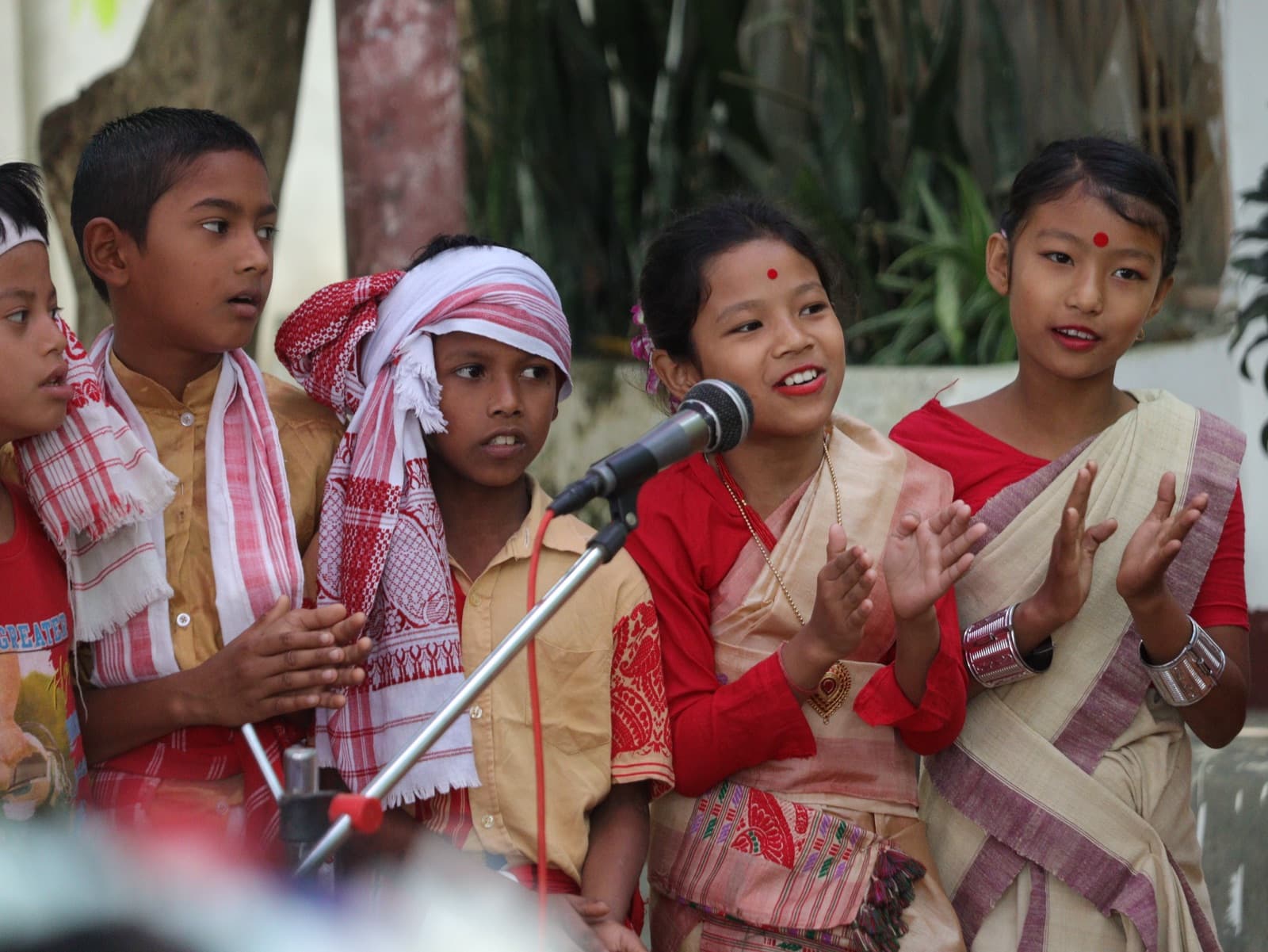
If you live in or near Kulamua, Garamur, or one of the 19 villages we serve, and you’d like your child to attend the Hummingbird School, the right next step is a conversation, not a form.
Walk to the school, or write to the team. Tell us about your child, their age, what they like, where they are in school now. We’ll meet, talk through how the Hummingbird approach fits, and figure out together whether this is the right school for the child. Most conversations result in a yes; some don’t, and we’ll be honest about why.
The school year begins each April. Conversations about joining typically start in January or February, but we are also able to take in children mid-year when circumstances require it.
If you know a child who needs a place at the Home
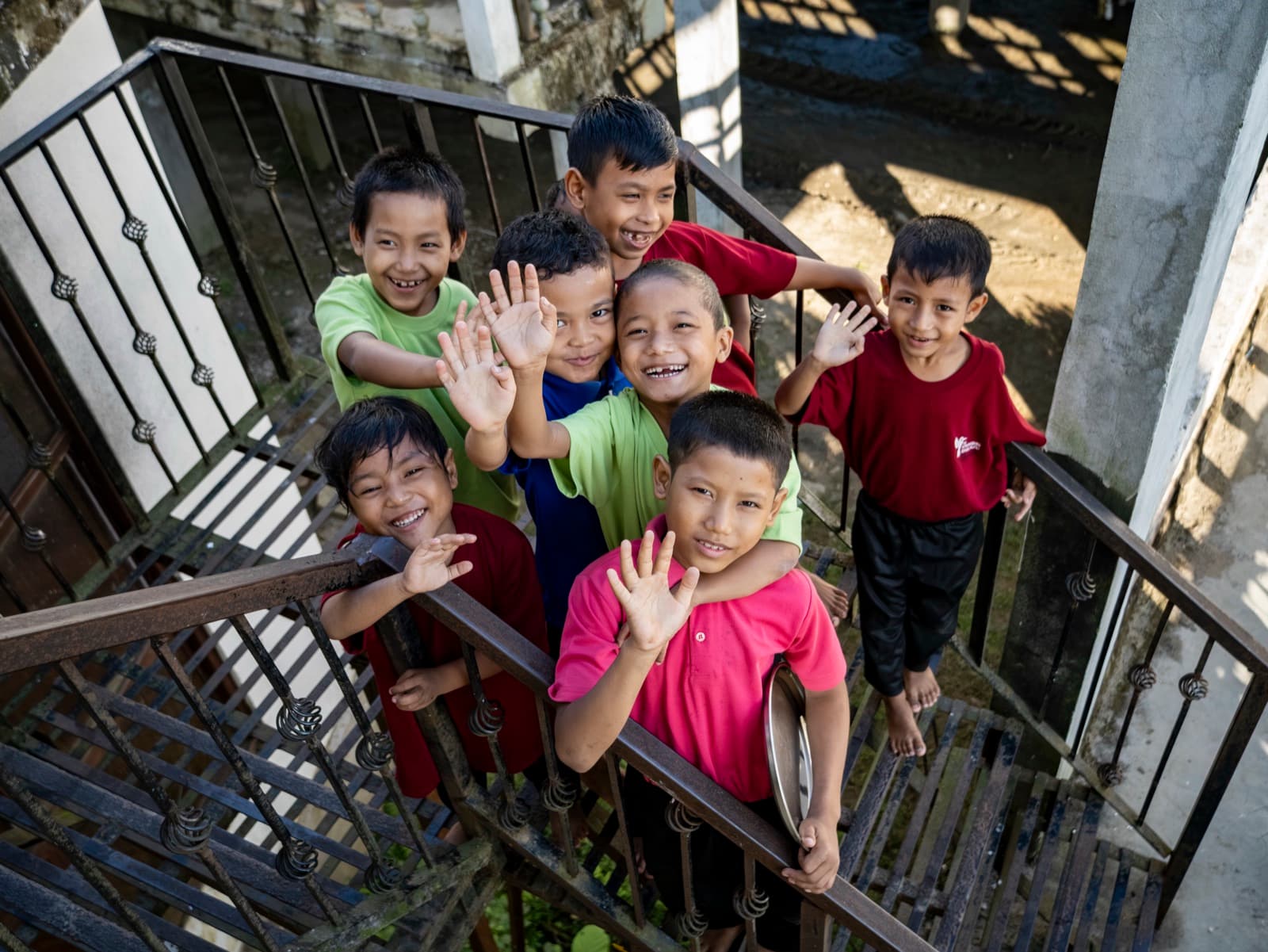
Placement at The Hummingbird Home is for children who cannot safely live in the home they have, orphaned, abandoned, escaping abuse, or in a household so financially fragile that their schooling is at imminent risk.
We work with referrals from Childline, the district child welfare committee, NGOs already working with the child, and community elders who know the family. If you are one of these, or if you are a relative, neighbour, or teacher who knows a child in this situation, write to the school.
Capacity at the Home is limited. We cannot say yes to every referral. What we can promise is that we read every email carefully, hold every conversation in confidence, and where we can’t take a child in, we try to help the family find another safe pathway.
If you’re a family from elsewhere
Families occasionally write asking whether their child can join the Hummingbird School from outside the Mising community, from Bombay, Bangalore, the diaspora, or from elsewhere in India and abroad. We treat each of those notes seriously, but the honest answer is usually no.
The school exists for the community it was built for. Bringing children from outside contexts can dilute the cultural and linguistic ground the school stands on, and it shifts capacity away from local children who would otherwise have nowhere to go.
If the school has moved you and you want to be part of the work, the most useful paths are different: support a child through donation, join the Legacy Circle, or come visit and see what you might give in skills or time.
Frequently asked
No. The school is fully funded by donors. Families that can contribute occasionally do so voluntarily; those that can't are fully supported.
Bilingual, Mising and Assamese are the languages of home and the early years, with English added gradually. By upper primary, children are comfortable in all three.
Most children join at LKG (around age 4) and stay through Class 10. We do take older children when their previous schooling has been disrupted, they join the grade that fits their level, not their age.
Write to us about the specific situation. We don't have a formal special-needs programme, but we have taken children with a range of needs and we'll be honest about what we can and can't support.
Yes, when circumstances require it, particularly for residential placements. Day-scholar admissions are easier in April but we accommodate mid-year joins case by case.
There is no formal list. We have a fixed capacity each year, when those places are full, we say so. For residential placements, urgent cases are prioritised over routine ones.
Support our work
Give to the Hummingbirds.
Sponsor a day scholar at ₹4,000/month, a residential child at ₹6,500/month, or give any amount to the Collective’s work.
Donate now80G, 50% tax deduction · Ayang Trust, Charity reg. 59/2017 (Assam)