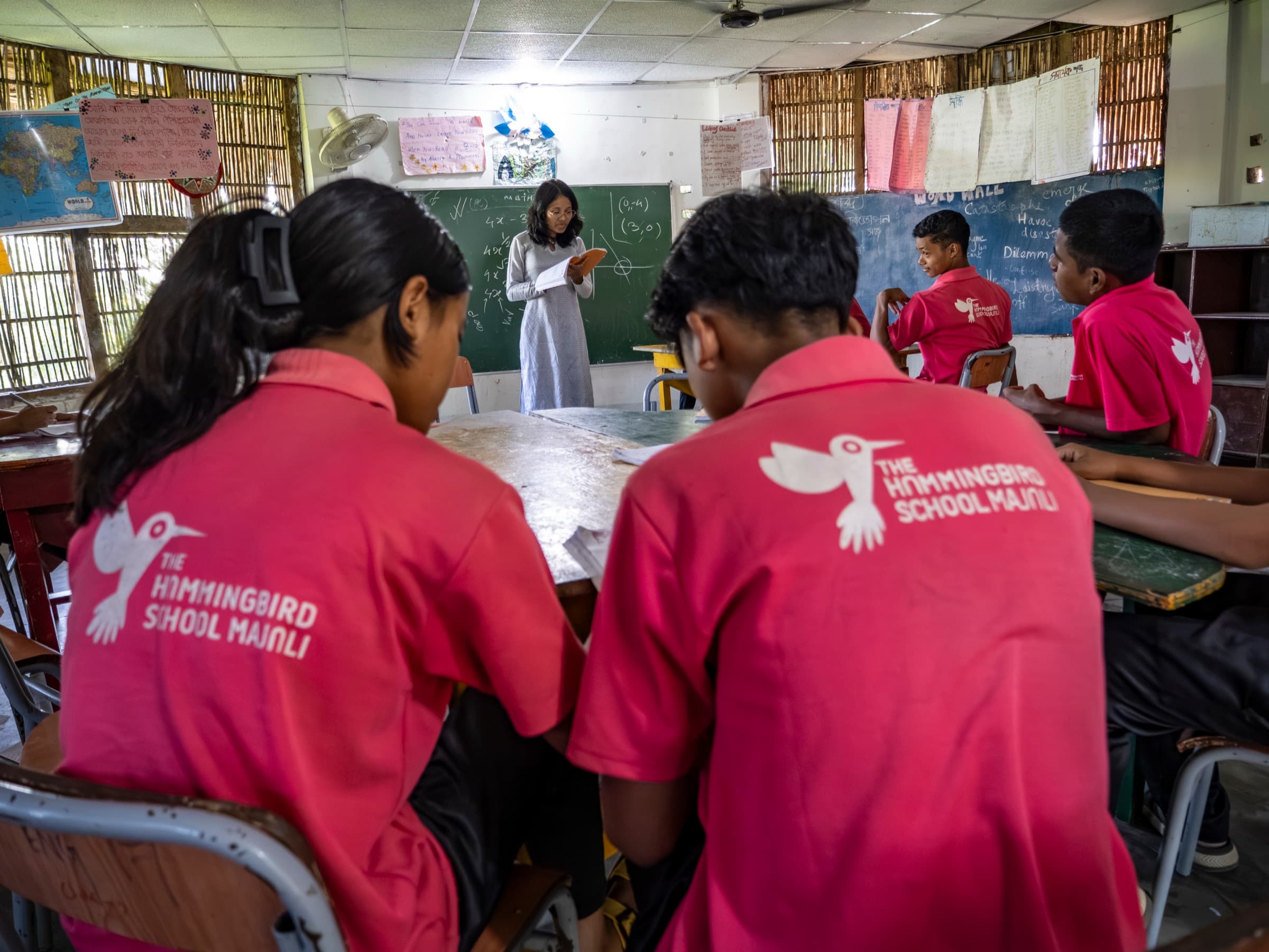
The Hummingbird School, Majuli
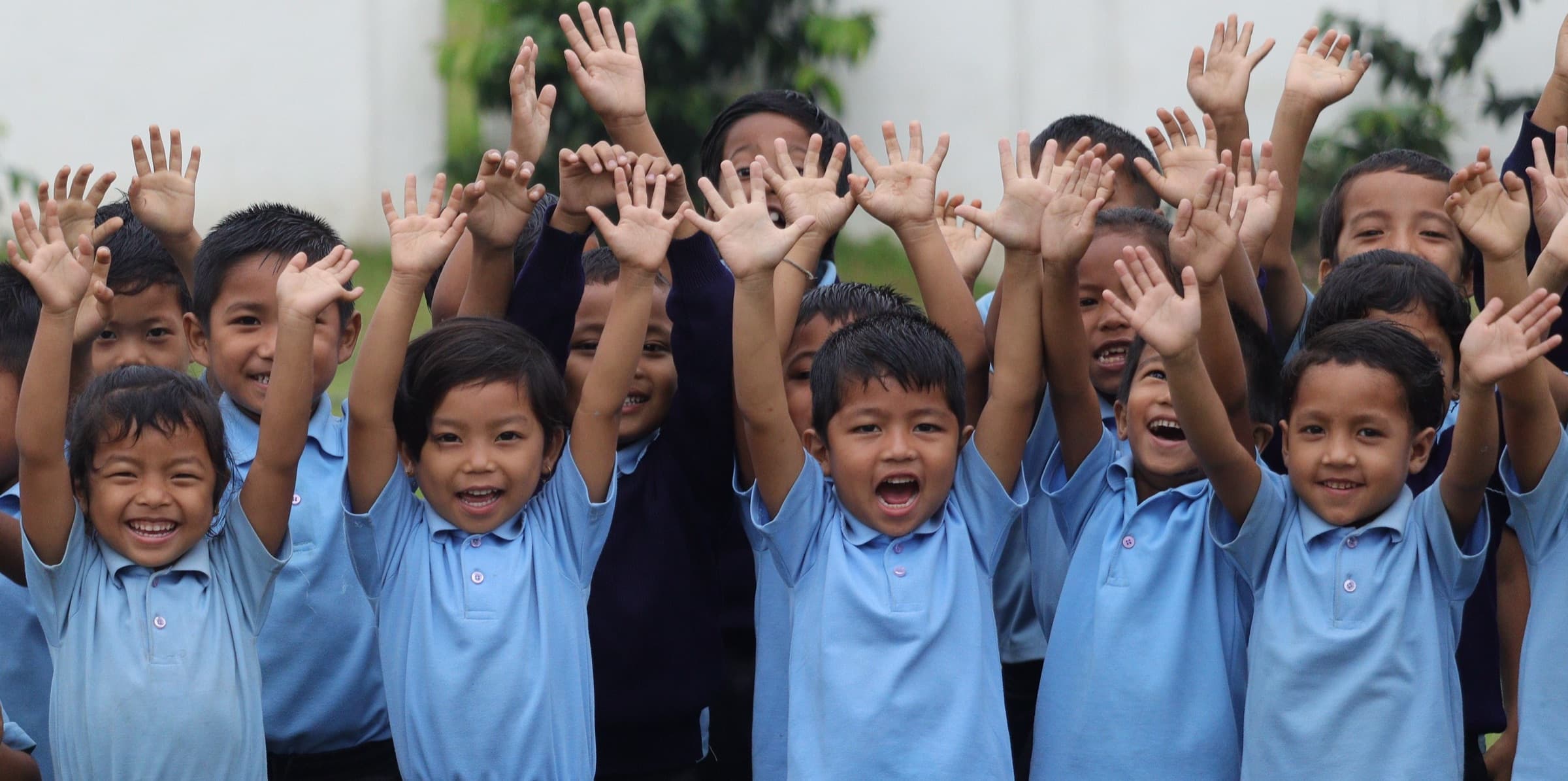
The Hummingbird School is where our journey began and where our model of education took shape. Nearly a decade later, it stands as an example of what child-centred education can achieve. By combining academic excellence and holistic development, the school nurtures children to become confident learners, compassionate individuals and leaders who are equipped to shape the future of their communities.
Background of the school
The Hummingbird School was born from the collective aspirations of 19 Mising villages in Majuli, Assam. The Mising are an Indigenous community whose lives have long been shaped by the rhythms of the Brahmaputra River, living with recurring floods, riverbank erosion, and geographic isolation.
As the largest Indigenous community in Majuli, many Mising families have historically faced limited access to quality education, healthcare, and other essential services. These challenges have contributed to cycles of poverty and exclusion, making it difficult for children to access opportunities that allow them to realise their full potential.
The Hummingbird School emerged as a community-led response to this reality, a shared belief that education could become a pathway to dignity, opportunity, and lasting change.
By the numbers
The Mising community has been historically isolated from social, political, and economic participation, and witch-hunting is fresh in the living memory of the current generation. These are the numbers Hummingbird was built to push against, and what we have built so far.
What we have built
19
Mising villages
Came together to build the school in Kulamua.
Jan 2017
Opened with 70 children
23 of them in a small residential home from day one.
309
Children today
LKG to Grade 10, 100 of them staying with us in residential.
What we work against
10%
of girls 14–19
are mothers or pregnant.
1 in 4
marriages in the area
are child unions.
60%
of Grade 5 students
cannot do subtraction.
Indicators reflect the broader Mising-region context, not Hummingbird students. Sources: NFHS-5, NCERT, ASER.
The Hummingbird Home
The Hummingbird Children’s Home is unique in its approach to providing a home for children from the most vulnerable situations. We have children who are orphaned or abandoned, with single parents, or from households troubled by domestic violence. Most of them come holding trauma of various forms.
At Hummingbird, we consciously endeavour to provide these children with a space where they feel safe and secure, where they can express their emotions and heal. The adults living on campus and the children in the home enable the unique communal culture of the campus, which is full of love and joy. Everyone is responsible for the upkeep of the campus and works together as one family.
Vision of the school
“The Hummingbird School envisions a future where its students blossom into leaders, lifelong learners, and truth-seekers, individuals who embody courage, compassion, and integrity.”
Our approach
Driven by our vision, there is intentional thought behind every decision at The Hummingbird School, from the shape of the building to how teachers speak with students.
Classroom design
Flood-safe, circular classrooms, built so the architecture itself embodies the school's commitment to equality.
Student–teacher relationships
Grounded in love, not in power. Every adult in the building is a co-learner first.
Pedagogy
Inquiry and dialogue in the classroom; an emphasis on self-learning; deliberate space for leadership to develop.
Content
Deepens a student's understanding of their own context, while opening a window onto the larger world.
School leadership
Rooted in democratic principles. Every adult in the community contributes to the journey.
The pedagogy of inquiry
Beyond academics, our students learn curiosity, courage, and compassion, drawn from inquiry, creativity, conversation, and lived experience.
Students learn by asking questions, examining ideas, and engaging with the world around them, not by repeating textbooks.
Learning is anchored in the river, the ecology, the language, the festivals, and the everyday life of Majuli.
Students collaborate, take meaningful responsibility, and build the skills to act on what they care about.
Theatre, storytelling, poetry, music, and the visual arts are not extras. They are how ideas become understanding.
Children are taught to think with discipline, observing carefully, testing assumptions, and revising their thinking.
Classroom highlights
From Class 3 to Class 9, each grade carries a signature, year-long programme that runs alongside the academic curriculum, designed to put students in real-world situations where the learning is the doing.
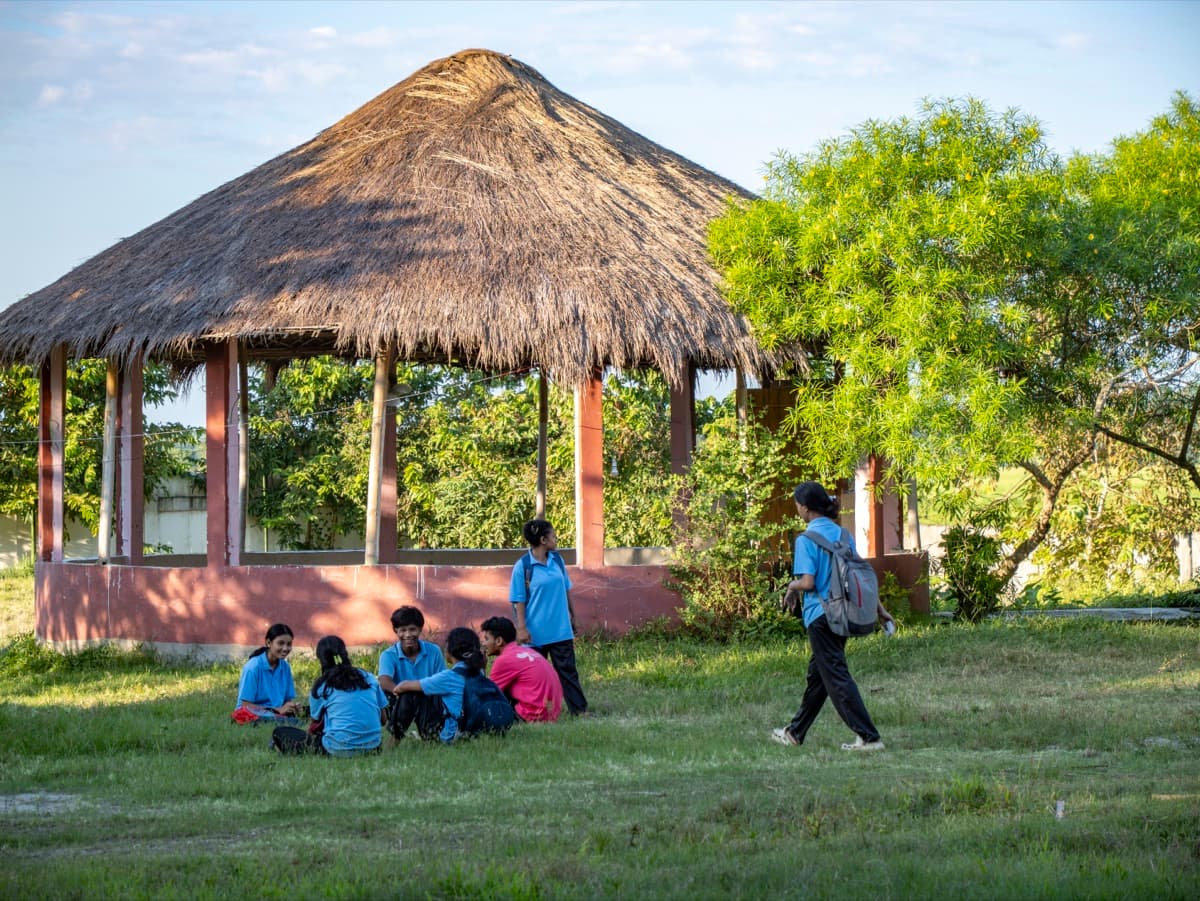
Class 3
Knitting
Students learn to knit, stitch by stitch. The circle builds patience, focus, and fine motor skills, and ends in the quiet pride of a finished piece made with their own hands.
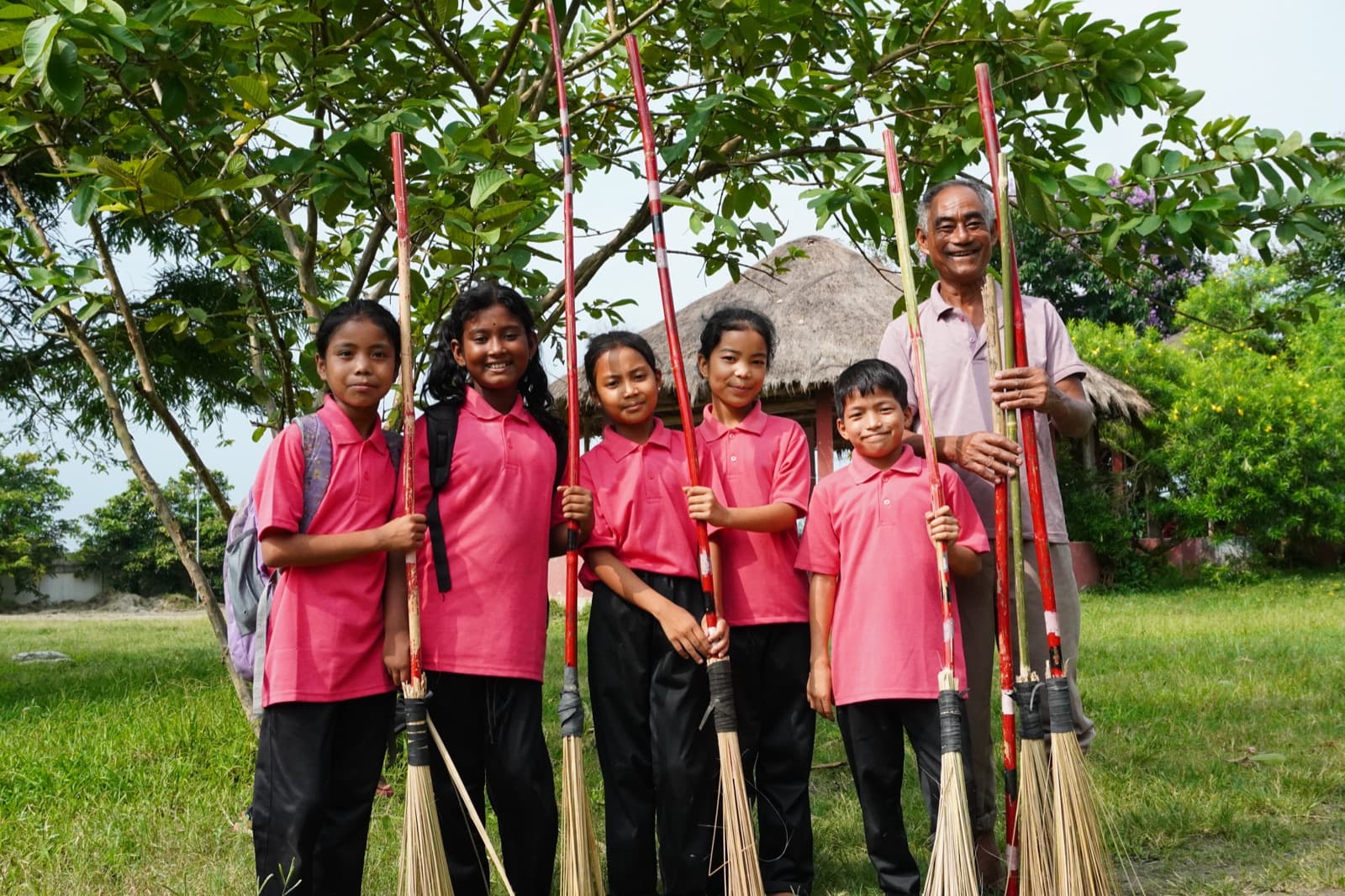
Class 4
Bamboo Craft
Working with locally available bamboo, students learn to make dryers, buckets, brooms, and small sheds, gaining an appreciation for indigenous craftsmanship and the patience it requires.
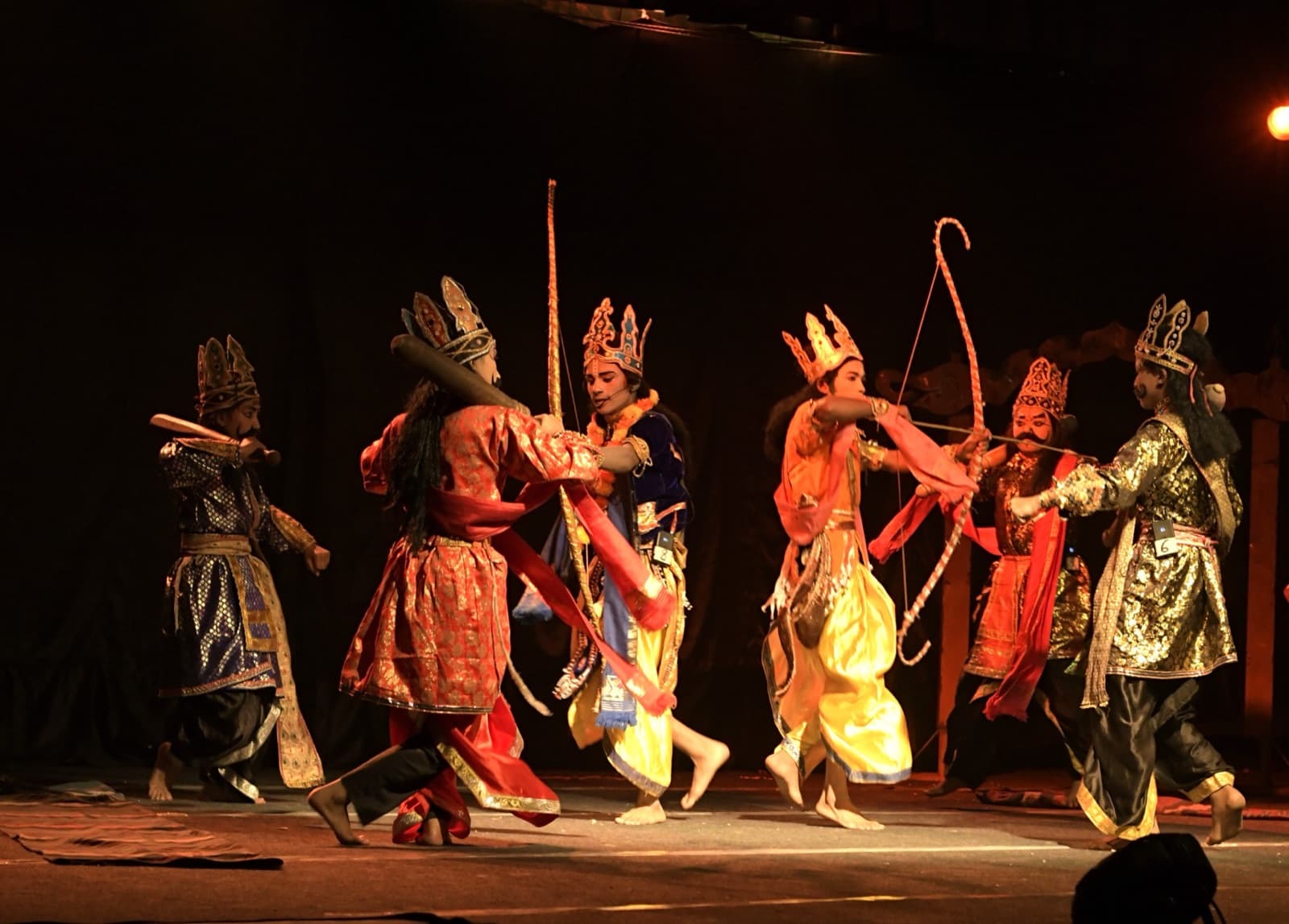
Class 5
English Theatre
An hour-long musical adaptation of George Orwell's Animal Farm, directed and produced with Red Curtain International. 24 students. 100+ hours of learning. 800+ in the audience at AMMO 2025.
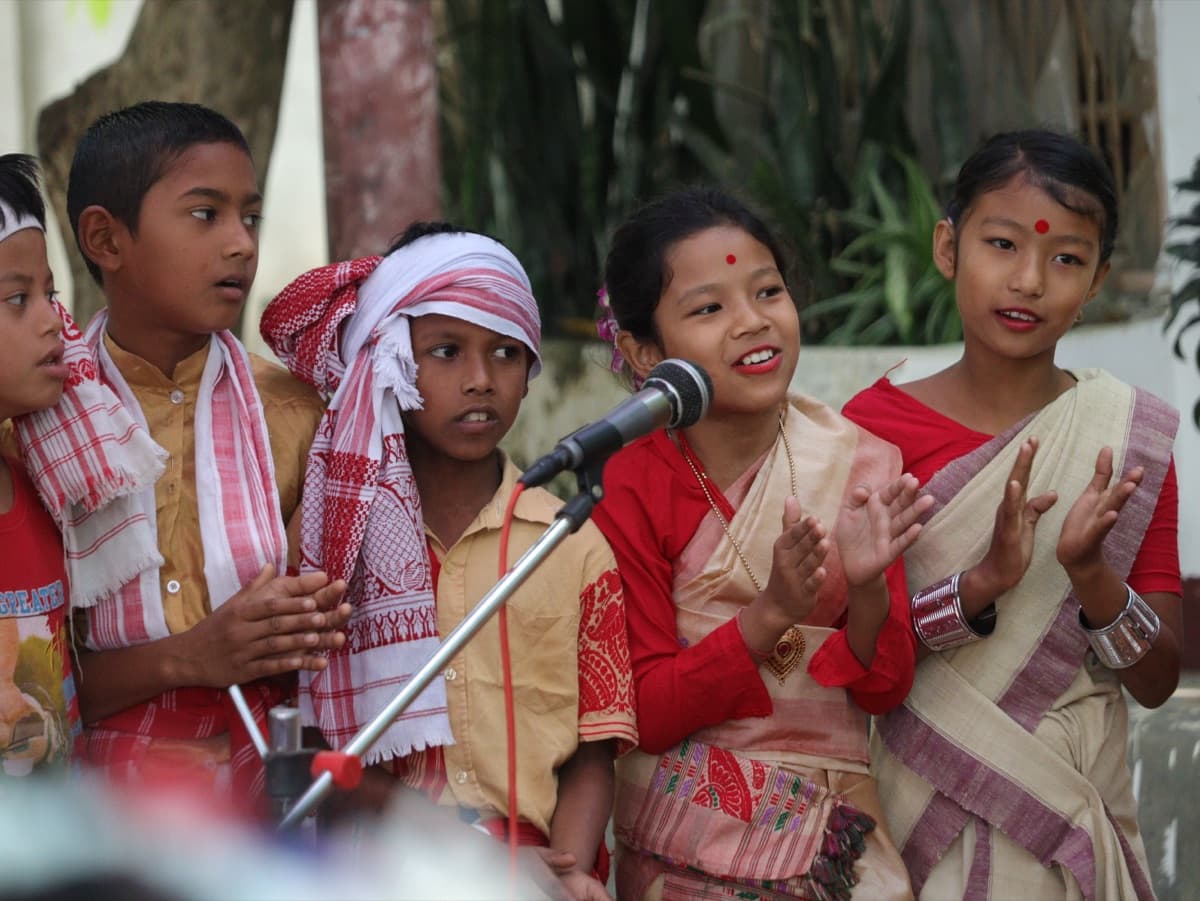
Class 6
Musical Ensemble
With the help of their music teacher, students are learning three songs as an ensemble, which will later be recorded and made into a music video.
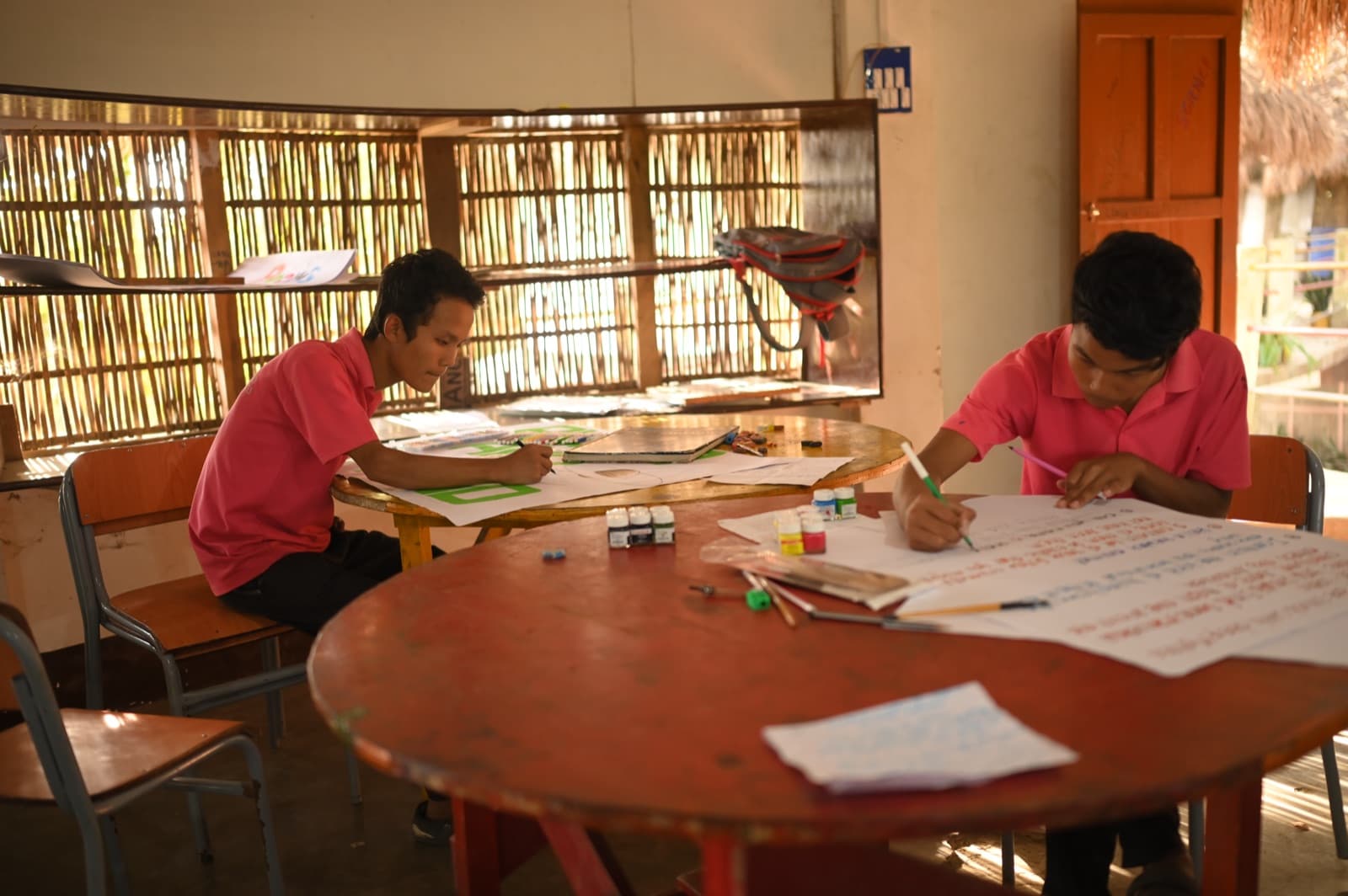
Class 7
Newsletter
Students are building an online newsletter covering stories, articles, and experiences, designing and creating it themselves. A link will be added here once it is ready for an audience.
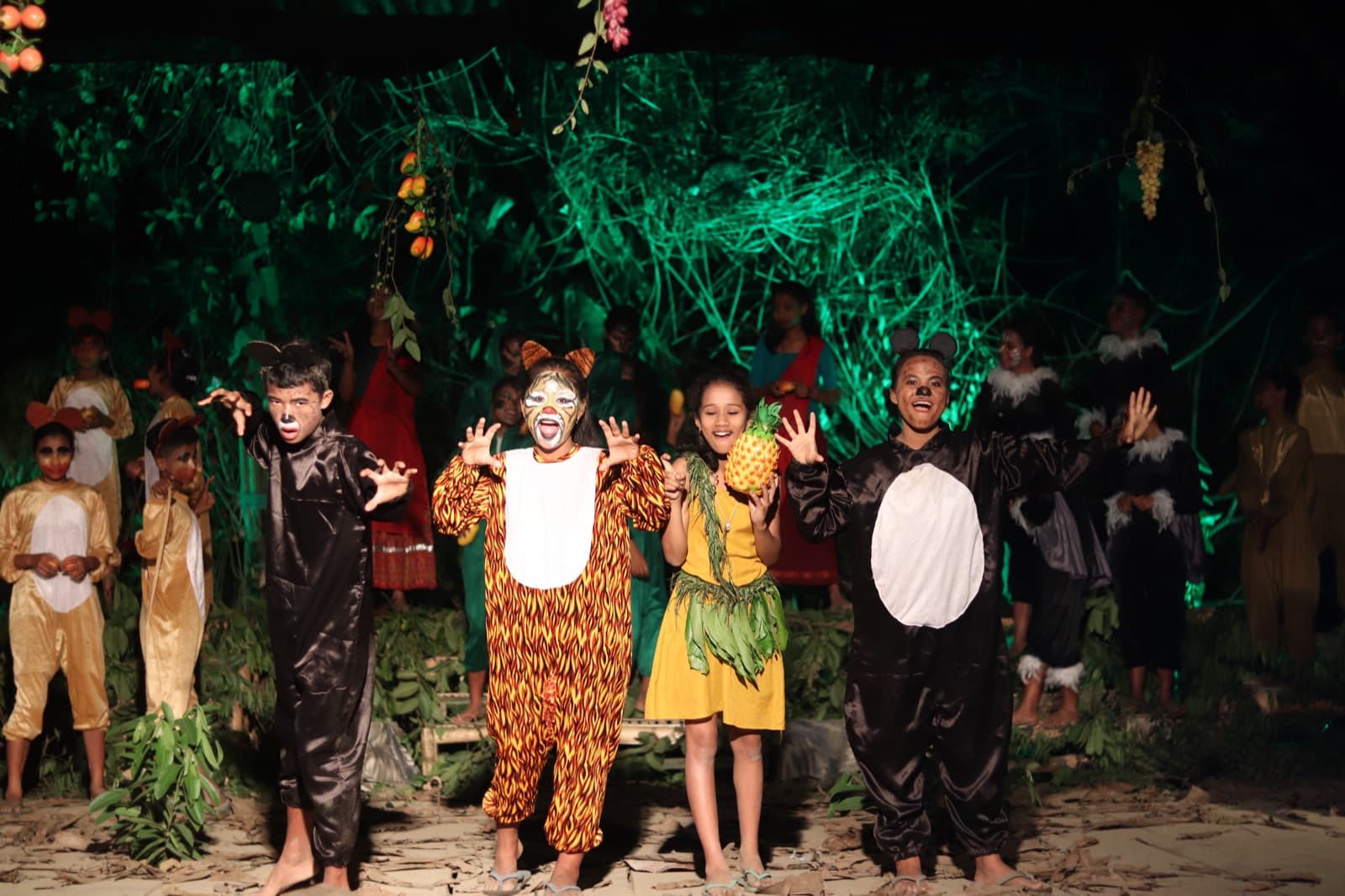
Class 8
Assamese Theatre
An annual Assamese-language theatre production. In 2025: Siyali Palegoi Ratanpur, adapted from the novella by Assamese novelist Nabakanta Baruah. Full house of 800+ at AMMO.
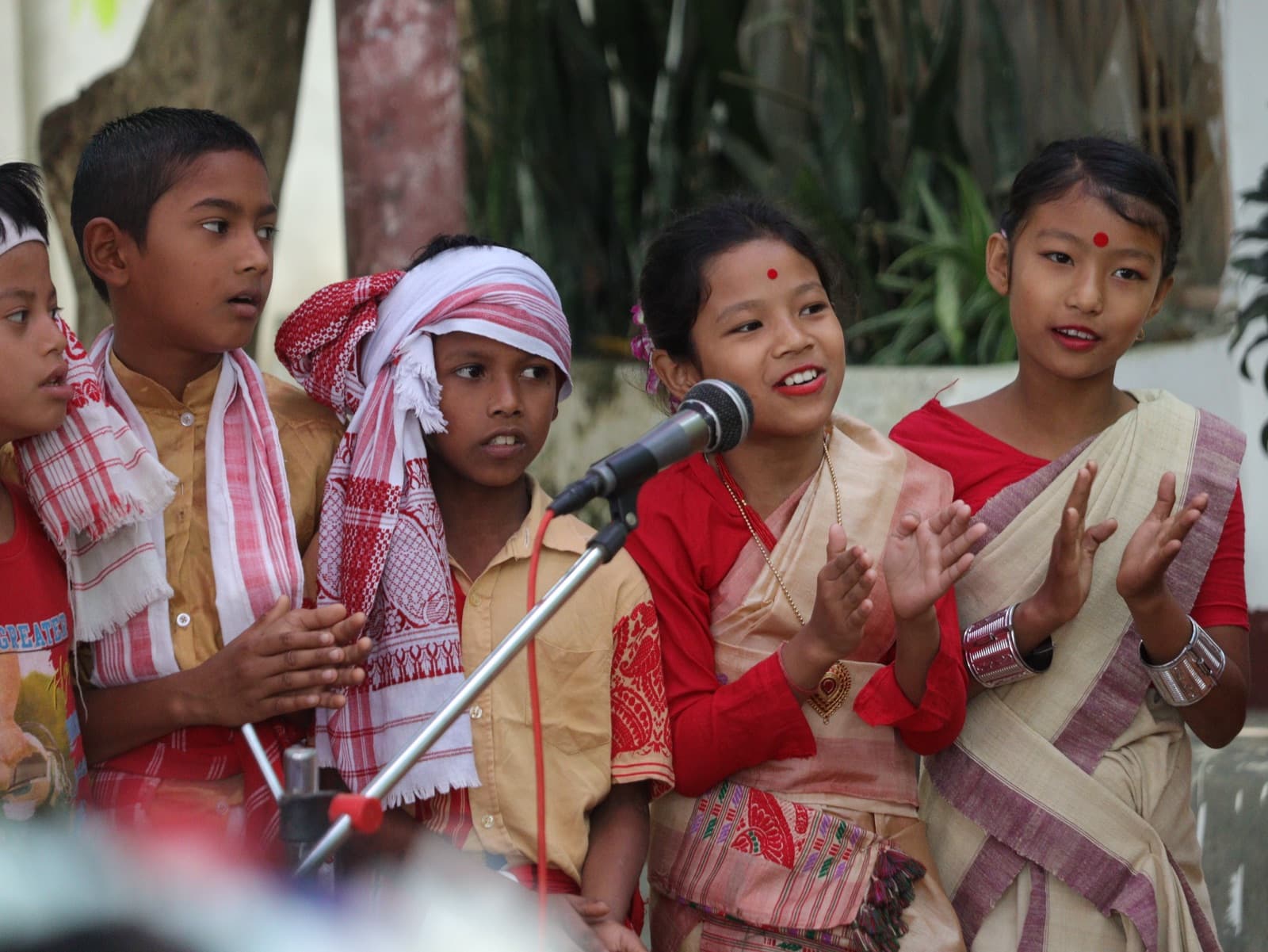
Class 9
AMMO Festival
Grade 9 conceptualises, curates, and executes AMMO, a three-day children's literary festival. In 2025 they raised ₹5 lakh+ independently and brought together students from 20+ schools across Majuli. Read more →
Visit the school, sit in on a class, or walk the campus. The work is best understood in person.
Support our work
Give to the Hummingbirds.
Sponsor a day scholar at ₹4,000/month, a residential child at ₹6,500/month, or give any amount to the Collective’s work.
Donate now80G, 50% tax deduction · Ayang Trust, Charity reg. 59/2017 (Assam)